
Ghosts of Wars Past: The Haunting of Our Oceans by Explosive Remnants of War
Dr Laurence Atkin-Teillet, Lecturer in Law, Nottingham Law School (https://www.ntu.ac.uk/staff-profiles/law/laurence-teillet)
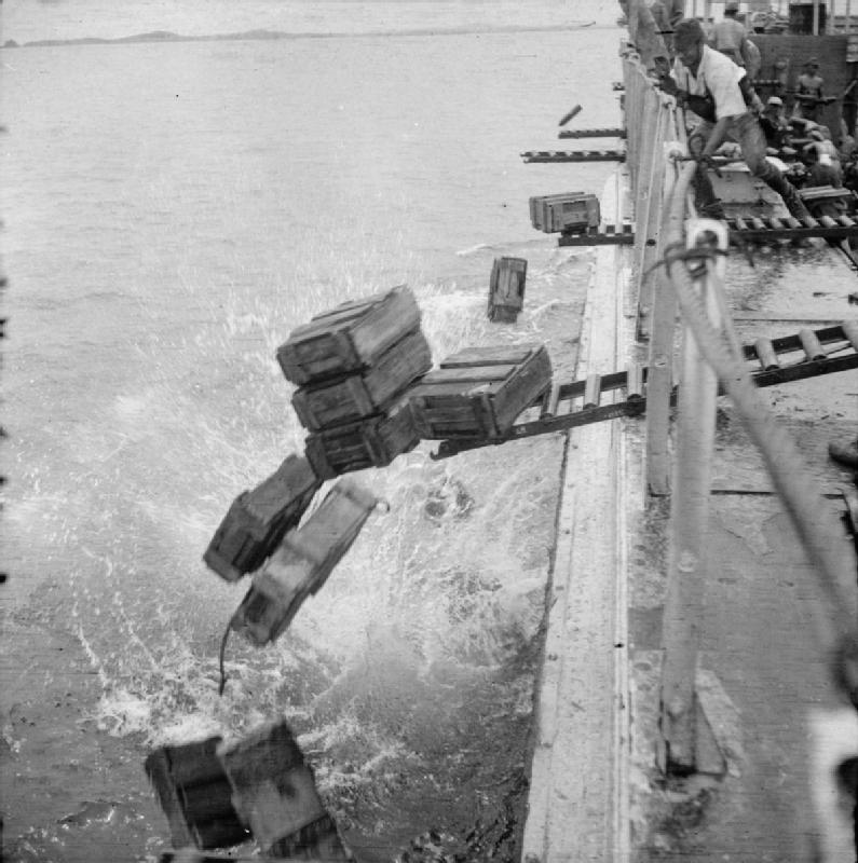
The wars may have ended, but their weapons remain. Across the North Sea and the wider marine environment, unexploded munitions and abandoned military materials continue to pose risks to marine ecosystems and human life.
Wars are frequently remembered through battles, casualties and the peace agreements that bring hostilities to an end. Yet some of their most enduring consequences remain hidden beneath the surface. Across the world’s oceans, the seabed contains a dangerous legacy of twentieth-century warfare: unexploded bombs, artillery shells, mines, torpedoes and chemical munitions that have remained underwater for decades.
The North Sea is especially affected. Following both the First and Second World Wars, the disposal of surplus ammunition at sea became common practice. Governments faced enormous quantities of captured, obsolete or unwanted military matériel, and dumping was seen as a convenient means of disposal: weapons were thrown overboard or transported in vessels that were then sunk, sometimes with limited documentation of their precise location or contents.
The scale was considerable. Historical estimates cited by the Convention for the Protection of the Marine Environment of the North-East Atlantic (OSPAR) Commission suggest that approximately 300,000 tonnes of munitions were dumped in the North Sea. At Beaufort’s Dyke, a deep underwater trench in the Irish Sea between Scotland and Northern Ireland, estimates go beyond one million tonnes. These figures are historical estimates: records of dumping operations were incomplete, and the full extent of the problem remains uncertain.
The consequences are not limited to history. Indeed, across the OSPAR maritime area, approximately 900 encounters with conventional, chemical or unidentified munitions are reported annually. More than half of these encounters involve munitions becoming entangled in fishing nets. In 2005, three fishermen died in the southern North Sea when a Second World War bomb exploded aboard their vessel after being hauled aboard in its nets.

Nor are the risks exclusively humanitarian. As the casings of submerged munitions deteriorate, they may become unstable or release hazardous substances into surrounding sediments and waters. Poland’s National Crisis Management Plan estimates that releasing only one-sixth of the chemical agents from the tanks lying at the bottom of the Baltic Sea could completely destroy life in the Baltic for about 100 years. The environmental consequences, of course, depend on the type of munition, its chemical composition and the conditions of the marine environment.
These weapons are, in a very literal sense, ghosts of wars past: physical remnants of conflicts whose political circumstances have disappeared, but whose material consequences remain. The question is not just how to remove them - it is how international law should respond when the environmental and humanitarian consequences of warfare continue long after the hostilities that produced them have ended.
International humanitarian law recognises that the consequences of explosive weapons do not necessarily end when hostilities cease. Protocol V to the 1980 Convention on Certain Conventional Weapons, adopted in 2003, addresses the humanitarian problems caused by explosive remnants of war (ERW).
The Protocol establishes a framework for reducing the dangers posed by ERW after conflict. Article 3 addresses ERW in territory under a State’s control, including clearance and removal responsibilities. Where a party to a conflict has used or abandoned explosive ordnance but does not control the territory in which it is located, it should, where feasible, provide technical, financial, material or human resources assistance to facilitate marking, clearance, removal or destruction.
Yet Protocol V has important limitations when applied to underwater munitions.
First, Article 1(2) provides that the Protocol applies to ERW situated on the land territory, including internal waters, of High Contracting Parties. It does not establish a general clearance regime for the territorial seas, exclusive economic zones, continental shelves, high seas or every area of the seabed.
Secondly, Article 1(4) expressly excludes existing ERW from the application of Articles 3, 4, 5 and 8. Under Article 2(5), existing ERW means UXO or AXO that existed before the Protocol entered into force for the relevant High Contracting Party. Consequently, the Protocol’s provisions on clearance, information, civilian protection and assistance do not apply to munitions that were already present when the Protocol entered into force for the State concerned.
Article 7 nevertheless recognises a right to seek and receive assistance concerning existing ERW, with States in a position to do so expected to provide assistance as necessary and feasible. The Protocol therefore acknowledges the continuing humanitarian problem posed by historical explosive remnants without establishing a universal obligation to recover all munitions from the marine environment.
If Protocol V offers only a partial response, international environmental law provides a broader framework for examining the legacy of submerged munitions.
Part XII of the United Nations Convention on the Law of the Sea (UNCLOS) establishes obligations concerning the protection and preservation of the marine environment. Article 192 provides that States have an obligation to protect and preserve that environment. Article 194 requires States to take measures necessary to prevent, reduce and control marine pollution from any source.
However, an essential temporal distinction must be made. UNCLOS was adopted in 1982 and entered into force in 1994. Much of the dumping that haunts the North Sea occurred immediately after the First and Second World Wars, decades before the Convention was adopted. Its provisions cannot simply be applied retroactively to establish that every historical dumping operation was unlawful.
The distinction between historical conduct and present-day obligations is central to determining responsibility:
· First, was the original dumping attributable to a State, and did it breach an international obligation binding on that State at the time?
· Secondly, does the continued presence of the munitions constitute a continuing internationally wrongful act? Not necessarily. Under the general law of State responsibility, an act is continuing where the relevant wrongful conduct itself continues, rather than where a completed act produces consequences that persist over time. The distinction depends on the content of the obligation allegedly breached and the nature of the conduct.
· Thirdly, irrespective of the legality of the original dumping, are there present-day obligations to address the environmental risk? This is where UNCLOS becomes important. Articles 192 and 194 provide a basis for examining what measures a State must take to protect and preserve the marine environment and to prevent, reduce and control pollution.
The existence of a present environmental risk does not automatically establish that the State responsible for the original dumping has breached a current obligation. Equally, the fact that the original disposal occurred decades ago does not mean that all contemporary environmental obligations are irrelevant. The legal position depends on the obligations binding on the State today, the nature of the risk, its knowledge of the relevant circumstances and the measures reasonably required in response.
The International Law Commission’s Draft Principles on Protection of the Environment in Relation to Armed Conflicts provide a useful framework for addressing these difficulties. Principle 26 addresses toxic or hazardous remnants of war under the jurisdiction or control of parties to an armed conflict, and Principle 27 specifically addresses remnants of war at sea. The latter provides that States and relevant international organisations should cooperate to ensure that such remnants do not constitute a danger to the environment.
However, the Draft Principles are not a treaty, and their provisions do not all have the same legal status. Some reflect existing international law; others contribute to its progressive development. Principle 27 should therefore not be presented as independently establishing a binding clearance obligation.
The environmental legacy of warfare reveals a weakness in the way armed conflict is often understood. We tend to imagine war as an event with a beginning and an end: hostilities commence, battles are fought, a ceasefire is declared and peace is restored. However, the physical consequences of warfare do not follow this chronology. Explosive remnants remain, hazardous substances may be released, and marine ecosystems can continue to bear the consequences of decisions taken generations earlier. Perhaps the most important lesson is that the end of hostilities should not be confused with the end of environmental harm. The seabed continues to hold the material traces of past conflicts, and the deterioration of submerged munitions may transform yesterday’s military decisions into tomorrow’s environmental risks.
International law cannot undo the wars that produced these remnants. It can, however, provide a framework for identifying hazards, clarifying applicable obligations, encouraging cooperation and determining responsibility where the legal conditions are satisfied. The sea may conceal the weapons of past conflicts, but it cannot guarantee that their consequences will remain buried forever. The question is whether States will confront these ghosts before they become a new environmental tragedy.
Further Reading:
OSPAR Commission, ‘Dumped Chemical & Conventional Munitions’, available at https://www.ospar.org/work-areas/eiha/munitions.
Protocol on Explosive Remnants of War (Protocol V to the Convention on Certain Conventional Weapons), adopted 28 November 2003, arts 2(2)–(5).
United Nations Convention on the Law of the Sea (adopted 10 December 1982, entered into force 16 November 1994) 1833 UNTS 3, arts 1(1)(4), 192 and 194.
International Law Commission, Draft Principles on Protection of the Environment in Relation to Armed Conflicts, with Commentaries (2022), Principles 1, 2, 23–27, available at https://legal.un.org/ilc/texts/instruments/english/commentaries/8_7_2022.pdf.
Kimberley J Graham, ‘Turning the Tide on Remnants of War at Sea? Toward the Principles for Protection of the Environment in Relation to Armed Conflicts’ (2024) 39(4) The International Journal of Marine and Coastal Law 768–787, https://doi.org/10.1163/15718085-bja10190.


Comments